Feature Article: Rebecca Wilson
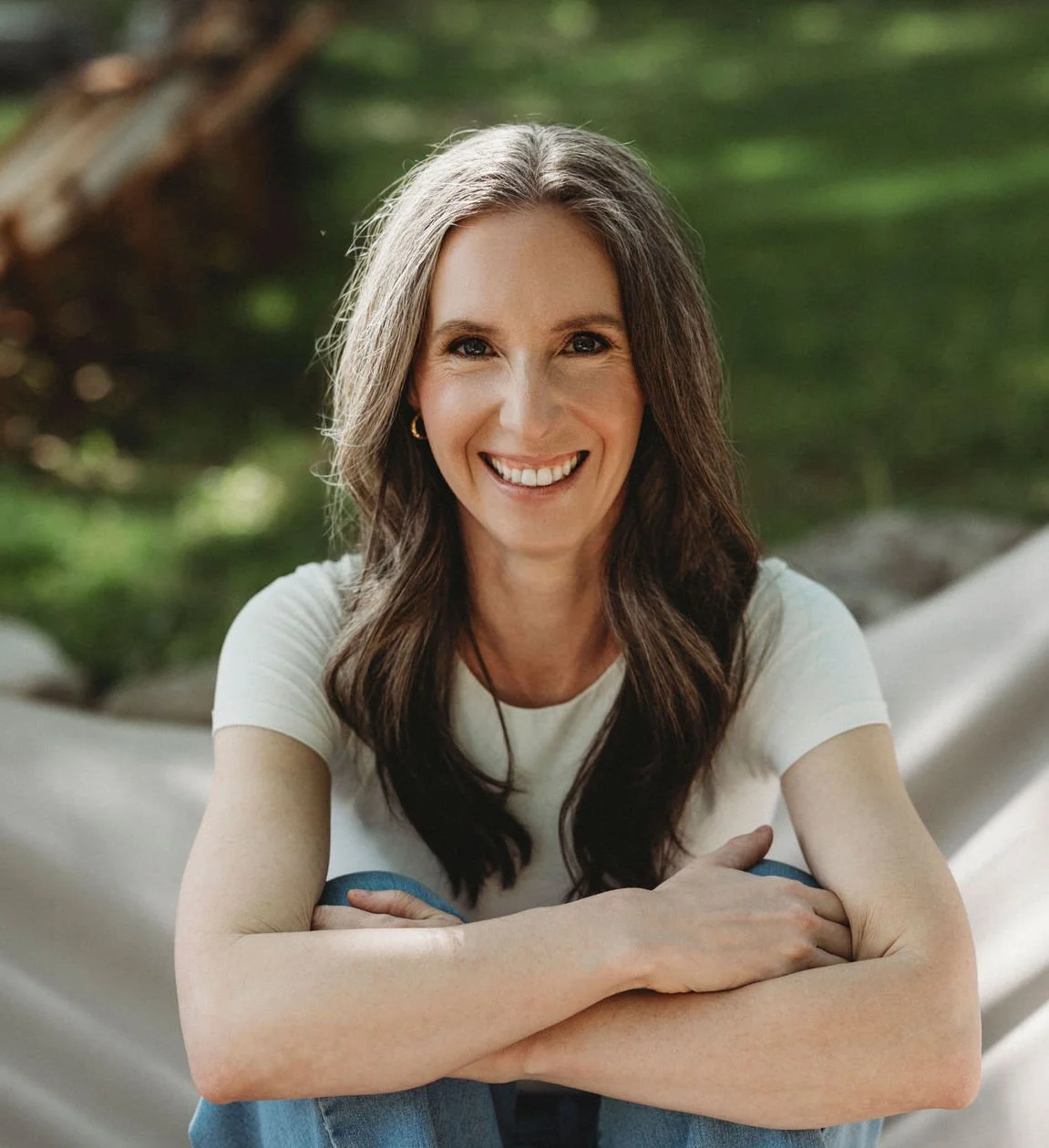
From the outside, Rebecca Wilson’s early life looked impressive: academic excellence and a steady rise through demanding professional environments. What makes her story worth honoring isn’t that she succeeded. It’s that she eventually became unwilling to keep living a life that only looked right.
Rebecca studied biochemistry, spent time in neuroscience research, earned an MBA, and built a career across management consulting and healthcare leadership. She knew how to perform at a high level, and for a long time that identity functioned like both a shield and a compass—keeping her safe, and showing her what to pursue next.
Underneath, something quieter persisted: an ongoing question about alignment, meaning, and truth. It stayed mostly buried when life was moving fast.
When Stillness Becomes Uncomfortable
In consulting, the pace was intense. In that intensity, the deeper questions were easy to outrun. They surfaced most clearly in stillness, when there was finally space to breathe.
On vacation, or during a slow week, Rebecca would feel restlessness that was more than boredom. It was physical discomfort—an urge to stay in motion, to clean up, organize, host, do anything except sit still. Busyness became a strategy for avoiding what might rise up if she stopped.
And when she did pause long enough to feel what was underneath, what came up was unsettling: maybe this isn’t the right career, the right relationship, the right life. Those questions felt scary, so she learned to get away from them. Looking back, she can name it plainly: she was running from herself.
The Hidden Cost of Striving
Rebecca can name what was powering the striving. Part of her wanted praise and recognition—wanted to be the best. Another part of her was determined that no one would ever see that desire. She carried a mask of humility over an inner compulsion to prove herself, and that contradiction was exhausting. Even while she looked confident, her foundation felt shaky: as though worthiness had to be earned, again and again.
A Series of Moments That Shook Her Awake
There wasn’t one dramatic turning point. It was a series of moments that gradually made it harder to return to the old way of living.
One still stands out. She was working late when she learned that a friend had died in a tragic and unexpected way. Grief brought a question that landed with force: If I died tomorrow, what would people say? Do people actually know me? The most haunting answer she could imagine was this: she worked hard; she was impressive.
That wasn’t the legacy she wanted. Not because achievement is wrong, but because it wasn’t the deepest truth of who she was.
Around that same chapter, Rebecca made another integrity-based decision: she ended a long relationship that looked good from the outside—steady, admired, with a partner who was a good person. The choice wasn’t about drama. It was about a quiet inner knowing: this isn’t the life I’m meant to live.
What followed was tender and chaotic. Without the steadiness she had relied on, she moved through a period of fear, grasping, and recalibration. The questions she had avoided were now unavoidable.
From Chasing to Detachment
Over time, Rebecca reached a point of surrender. She let go of chasing and forcing outcomes, and she accepted—calmly—that her life could be full even if it didn’t unfold the way she once assumed it should. That inner shift became a lasting reference point. She began noticing the same pattern elsewhere: the more she gripped and needed a specific outcome, the more constricted everything felt; the more she returned to what was true, the more life seemed to reorganize around that truth.
Outer Success Wasn’t Solving an Inner Question
Professionally, Rebecca kept pursuing impact. Consulting gave her significance for a time. Healthcare called to her as another place where her work could matter. She made thoughtful moves, hoping the right role would settle the restlessness.
But eventually she noticed a pattern: she was making outer changes in an attempt to feel better on the inside. When something didn’t feel right, the instinct wasn’t to go inward and ask what was true; it was to find something “better” and move toward it.
At the same time, she was being offered the kind of opportunities society praises—bigger roles, clearer status markers. Her response surprised even her: I don’t think I actually want that. The question that followed was disorienting and clarifying: If I don’t want the thing I’m supposed to want, then what do I want?
What She Wanted Was Freedom
When Rebecca got honest, she realized she didn’t want traditional success for its own sake. She wanted to create and build, and she wanted freedom—freedom to express herself through her work, and freedom for her work to evolve as she evolves. She also learned that her truth wasn’t one fixed plan. It was something living—something she needed to stay in relationship with, moment by moment.
As she began naming what she wanted more clearly, parts of the external world responded. In organizational settings, she was sometimes able to negotiate structures that supported her growth, making room to coach while still contributing in leadership contexts. Not every environment can do this, but her willingness to claim what was true opened doors many people never think to knock on.
The Work She’s Building Now
Rebecca eventually stepped into coaching not as a trendy pivot, but as a coherent expression of what had been building for years: her commitment to impact, her love of developing people, and her devotion to inner truth.
Today, she is a mindful executive coach who supports leaders with busy minds and big responsibilities—people who want to do good in the world, but often feel consumed by the weight of their work. Through retreats, private coaching, and a peer community program she runs called The Conscious Leadership Collective, she helps leaders clarify their vision, name their zone of genius, and navigate the fears that arise when someone tries to bring a meaningful vision to life.
Mindfulness and meditation are central to her approach as practical tools for quieting mental chatter and returning to what is true. The goal is leadership with clarity, spaciousness, and inner freedom.
Risk, Self-Trust, and Legacy
Rebecca still feels fear—of uncertainty, of losing security, of being misunderstood. But she has come to see a greater risk than any of those: living out of alignment. For her, the deepest danger is not failure. It is an untrue life.
Motherhood has made that conviction more personal. Legacy became less theoretical and more immediate: she wants her daughter to grow up with an embodied example that alignment is worth choosing, even when it costs something.
Rebecca’s story is a story of building the capacity to sit with herself long enough for the truth to surface, and learning that the questions don’t have to be answered immediately to be worthy of attention. Her legacy is lived in the quality of her presence, and in the ripple effect that steadiness creates in the leaders she serves and the life she is shaping at home.
To hear Rebecca share her story in her own voice, you can listen to the full conversation here.
To reach out to Rebecca and learn more about her work, you can visit her website at: Website: www.arborvida.com